






In high school, I discovered the magic of makeup. One swipe of concealer and that smattering of zits would be rendered nearly invisible. I felt transformed. With the aid of something magical (thank you, Sephora) I felt like I could brave every circle of hell (aka: high school).
Transformations wield power. That thrill of changing is part of the reason why I love all kinds of transformation scenes, from the frosted ball gown swirling around Cinderella to Jacob Black ripping off his shirt and going full wolf. But my favorite transformations are often quieter. The changes the character undergoes are more or less reflective of an emotional state. How the characters appear—either by choice or curse—becomes illustrative of their psychological plane. Sometimes the character’s transformation foreshadows who they will be or how they will one day see themselves. In these five books, transformations range from the benign and the charming, to the conniving and powerful.
Shadow and Bone by Leigh Bardugo
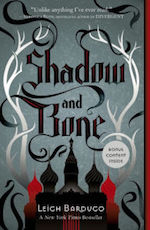 I love Bardugo’s Grishaverse. One of the most unique characters is Genya Safin, a Tailor who alters appearances. Under Genya’s ministrations, the protagonist, Alina Starkov, gets the Cinderella makeover. But Bardugo subverts that makeover moment by giving it a new context: this is the start of all the ways Alina struggles to hold onto herself. Throughout the book, Alina’s appearance is nowhere near as important as her abilities, but the transformation really struck a chord with me. I loved how it showed how we can become strangers to ourselves, and how we negotiate what’s truly beautiful to us.
Alice in Wonderland by Lewis Carroll
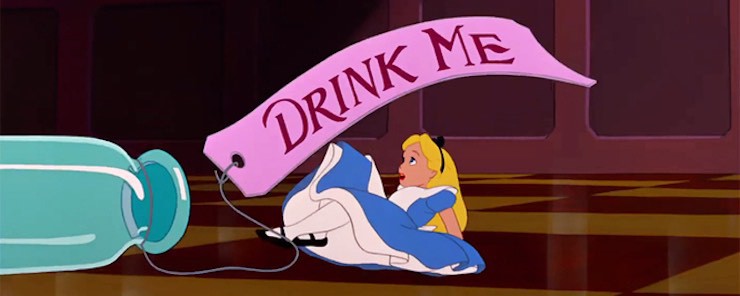
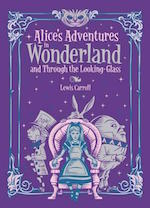 Those little magical cakes (“EAT ME”) and the tiny bottle (“DRINK ME”) led to some very rapid and obvious transformations for poor Alice. When I first read the story, I just got ridiculously hungry and would eye every PB&J sandwich with mounting suspicion. Did the peanut butter harbor magical attributes untold? (Alas. It did not. Or perhaps I kept picking up the wrong sandwiches.) But Alice’s transformation—growing large, shrinking small—was a very satisfying metaphor of childhood. Still a weird and beloved read.
Deathless by Catherynne Valente
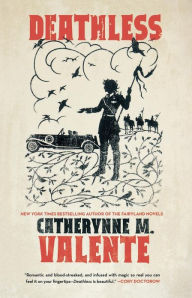 One of my favorite lines from this book (of which there are many, because Valente is a magical wordsmith) is: “Cosmetics are an extension of the will…when I pinch my cheeks and dust them with mother-of-pearl, I say: death, keep off, I am your enemy, and you will not deny me.” I loved how Valente demonstrates that transformation by cosmetics isn’t the hallmark of a vain girl, but also about the statements we make about who we are—or who we want to be—depending on the moment. COSMETICS ARE A WAY OF WAR! (ululates)
The Magicians by Lev Grossman
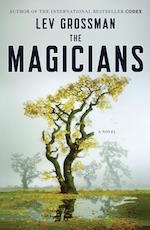 Even though I’d probably never want to attend the Brakebills College for Magical Pedagogy, I loved the transformational aspect of Brakebills South, where the students are turned into animals, like geese and Arctic foxes. The point of these transformations was to help the students in what they needed to be. Sometimes you have to get out of your skin (literally) to get things done.
Howl’s Moving Castle by Dianna Wynne-Jones
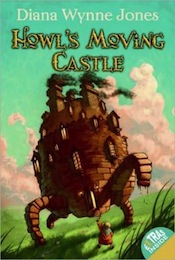 Sophie is one of my favorite YA heroines. Her cursed transformation into an old woman shows how disguises often let us be our true selves. Her confidence grows. She feels freed of her past timidity. By the end of the book, it becomes clear that Sophie was retaining her own spell. I really loved how her transformation ended on her own terms, and not by some magic kiss or what have you. She had it in her all along.
 Roshani Chokshi comes from a small town in Georgia where she collected a Southern accent, but does not use it unless under duress. She grew up in a blue house with a perpetually napping bear-dog. At Emory University, she dabbled with journalism, attended some classes in pajamas, forgot to buy winter boots and majored in 14th century British literature. She spent a year after graduation working and traveling and writing. After that, she started law school at the University of Georgia where she’s learning a new kind of storytelling. Her book The Star-Touched Queen is out April 26th from St. Martin’s Griffin.


How about Elantris. What once was an amazing transformation into a near god has become a curse of unending pain and eventual insanity.
Seanan McGuire’s “October Daye” series, which begins with its protagonist spending fourteen years transformed into a goldfish. (She gets better.) Transformation stays a major theme throughout the series.
I’m fond of selkie stories, and while it’s not my favorite selkie novel, my favorite description of the human-to-seal transformation is in Franny Billingsley’s The Folk Keeper: “…I did not drown. I was reborn. I was born in reverse, exploded from one medium into another, from air into liquid, from dawn into darkness; and all around there was the singing of the sea.” (Though that’s actually not yet the full transformation to seal; that comes in the last chapter, and is also wonderfully described.)
Then there are Wart’s transformations into animals courtesy of Merlin, in White’s The Sword in the Stone–my favorite literary transformations in childhood. And Eustace’s transformations into and out of dragonhood in The Voyage of the Dawn Treader. I’m sure I’ve read dozens and dozens of books and stories with human-to-animal transformations, but these are the three that stick in my mind.
It’s not magical, exactly, but Animorphs!
Becoming the animal comes along with dealing with its instincts, which (whether accurate or not) Applegate (and her various ghostwriters) do a really vivid job of depicting. Sometimes the instincts help them solve the Problem Of The Book, sometimes they’re a huge obstacle. The characters often reference specific animals when they deal with human problems – Rachel tries to channel a cat when she does gymnastics, for example.
Man, my kingdom for an Animorphs reread on tor dot com!
Late to this, but I recommend Margaret Mahy’s The Changeover. It’s the story of a mostly normal teenage girl in New Zealand, whose baby brother is being sickened by a supernatural creature. She asks an older boy from her school for help, because she instinctively recognizes that he’s a witch. It’s a great romance with a very unusual romantic male lead, but the main thrust of the book is Laura literally remaking herself (the titular changeover) in order to save her brother.
I think that everything written by Jack L Chalker involves transformation, from his Well World series to his, uh, space demons (Wikipedia tells me it was The Quintara Marathon) series to his fantasy book(s).
https://en.wikipedia.org/wiki/Jack_L._Chalker